


Cleaning jewelry: how to do it right for every material
After a while your jewelry starts to look a little dull, there is a film of tarnish in the links, or a ring is simply ready for a refresh. The big question: how do you clean your jewelry properly without damaging it? In this guide you will find the safe basic method, the mistakes you are better off avoiding, and exactly what to do for each material — from stainless steel and gold to silver, natural stone and pearls.
Easy to keep clean — waterproof jewelry
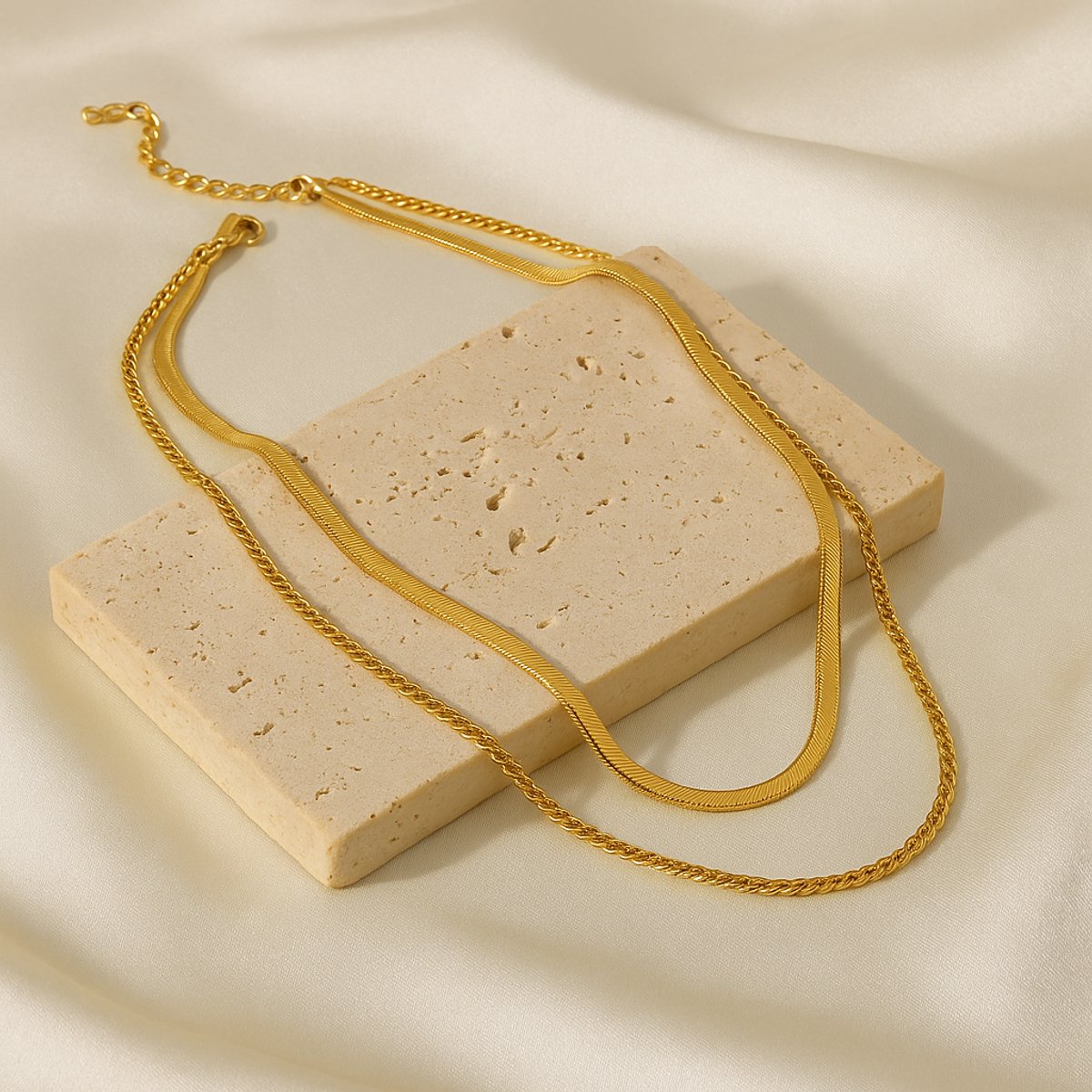
Stainless steel with a PVD coating is by far the easiest to clean: a quick rinse and pat dry is all it takes. A small selection from the Lundholm collection.


The safe basic method in 5 steps
For the vast majority of jewelry — metal rings, earrings, necklaces and bracelets — this gentle method works perfectly. It is the same approach jewelers use for day-to-day care, only at home and without expensive kit.
- Make a lukewarm soapy solution. Fill a small bowl with lukewarm (not hot) water and add a few drops of mild dish soap.
- Soak briefly. Leave the piece in it for 5 to 10 minutes so dirt, skin oils and soap residue come loose. Skip this step for natural stone, pearls and glued-in stones (see further down).
- Brush gently. Run a soft toothbrush along the links, behind stones and into the grooves where dirt collects. Rub gently, do not scrub.
- Rinse thoroughly. Rinse under lukewarm running water so no soap is left behind — do this over a closed drain or a bowl, so a ring cannot slip away from you.
- Pat completely dry. Pat dry with a soft, lint-free cloth and let the piece air-dry for a moment if needed. Moisture left behind is in fact one cause of dull patches.
Done. For a piece you wear every day, doing this once every few weeks is more than enough to keep it gleaming.
What you need (and what to leave out)
You do not need a special jewelry cleaner for most pieces. What you do use: lukewarm water, a few drops of mild dish soap, a soft toothbrush or make-up brush, and a soft microfiber or silver cloth to pat dry and buff.
What to leave out: toothpaste (it scratches soft gold and coatings), abrasive cleaners and sponges with a rough side, bleach and chlorine-based cleaners, harsh jewelry dip, and pure alcohol or acetone on colored or coated jewelry. An ultrasonic cleaner may look handy too, but it can actually damage loose stones, pearls and natural stone — only use one if you are certain the piece can take it.
Cleaning jewelry by material
Not every piece should be cleaned the same way. Here is the quick overview; below it you will find the details per material. Not sure what your jewelry is made of? Then read our guide on which jewelry material does not discolor first.
| Material | Best method | Avoid |
|---|---|---|
| Stainless steel (with PVD) | Lukewarm soapy water, brush gently, pat dry | Abrasives, steel wool |
| Solid gold (14k/18k) | Lukewarm soapy water, soft brush, rinse | Toothpaste, hard brush |
| Gold-plated | Only wipe gently with a damp cloth | Brushing, dipping, scrubbing |
| Silver (925 sterling) | Silver cloth, then mild soapy water | Toothpaste, long soaking |
| Cubic zirconia / stones | Soapy water + soft brush behind the stone | Ultrasonic on glued-in stones |
| Natural stone (rose quartz, amethyst, lava stone) | Slightly damp cloth, dry immediately | Soaking, soap, ultrasonic |
| Pearls (real or imitation) | Soft damp cloth, dry flat | Submerging, alcohol, perfume |
Cleaning stainless steel — the easiest of them all
Stainless steel (surgical steel), certainly with a PVD coating, is the lowest-maintenance material there is. It does not tarnish and it is waterproof, so you can simply rinse it under lukewarm running water with a drop of dish soap, brush gently for a moment and pat it dry. No polishing, no special products.
The only thing to watch: do not use abrasives or steel wool, because they can leave tiny scratches in the shine. Beyond that, the rule is: the more often you wear it, the less care it needs. That is exactly why our whole Lundholm collection is deliberately made from premium stainless steel.
Cleaning gold and gold-plated jewelry
Solid gold (14 or 18 carat) copes perfectly well with the mild soapy solution. Soak it briefly, brush gently behind any stones and rinse thoroughly. Because pure gold is relatively soft, always use a very soft brush and never toothpaste or an abrasive.
Thin gold-plated jewelry asks for the opposite: the less you rub it, the longer the gold layer stays intact. Brushing and dipping wear the thin layer away. So only wipe gold-plated pieces carefully with a slightly damp, soft cloth and pat them dry straight away. Want to know why thin plating discolors over time? You will find it in why does my necklace discolor.
Cleaning silver — removing tarnish
Real silver (925 sterling) darkens over time; that is a normal reaction with sulfur in the air and in perspiration, not a quality defect. The best way to remove that dark tarnish is with a silver polishing cloth: gently buff the silver until the shine comes back. After that you can briefly run it through mild soapy water to remove polishing residue, and pat it thoroughly dry.
Store silver airtight between wears (in a resealable pouch, for example), because it tarnishes far more slowly that way. Want the silver look without the polishing? Then silver-tone stainless steel is a maintenance-free alternative.
Jewelry with cubic zirconia or stones
It is behind the stones that most dirt and skin oil builds up — which is exactly why a ring with cubic zirconia sparkles less after a while. Clean these with the mild soapy solution and carefully run a soft brush or toothbrush behind and around the stone. Rinse and pat dry.
Take care with glued-in stones: do not soak them for long and do not use an ultrasonic cleaner, because water and vibrations can affect the glue. Clean briefly and dry quickly is the rule here.
Cleaning natural stone (rose quartz, amethyst, lava stone)
Natural stone is porous and does not like prolonged contact with water and soap. So clean jewelry with rose quartz, amethyst or lava stone with a slightly damp, soft cloth only and dry it immediately afterwards. No soaking bath, no dish soap and certainly no ultrasonic cleaner. Lava stone is extra porous on top of that, so keep it out of the water as much as you can.
Cleaning pearls (real and imitation)
Pearls are the most delicate of all. They cannot take soap, alcohol, perfume or soaking. Wipe them with a soft, slightly damp cloth after wearing and let them dry lying flat, so the stringing thread does not stretch. The golden rule for pearls: they go on last (after perfume and hairspray) and come off first.
Would you rather have jewelry that barely needs any care?
Our whole collection is premium stainless steel with PVD — waterproof, hypoallergenic and simple to keep clean.
Shop all jewelry →How often should you clean your jewelry?
That depends on how often you wear it. A ring or necklace you wear every day benefits from a quick clean once every two to four weeks. Jewelry you wear now and then just needs a wipe after wearing, plus a more thorough clean a few times a year. Silver you tackle as soon as you see it starting to tarnish.
The most important thing is actually not cleaning but preventing dirt — and that saves you the most work.
Simple to keep clean — another selection from the collection


How to stop your jewelry getting dirty or dull
A few simple habits mean far less polishing. The most important rule: jewelry goes on last and comes off first. So put it on after your perfume, cream, hairspray and make-up, because together with skin oil those products form the layer that makes your jewelry look dull.
It also helps to store pieces separately so they cannot scratch each other, to take them off while cleaning, doing the dishes and working out, and to rinse them with clean water after contact with chlorine or salt water. Want to know which jewelry can handle plenty of water and which you are better off taking off? Then read swimming with jewelry. And if you have sensitive skin, our guide to hypoallergenic jewelry is worth a read too.
Why stainless steel jewelry needs so much less care
We deliberately make all of our jewelry from premium stainless steel with a 2.5 micron PVD gold or silver plating. The big advantage when it comes to cleaning: it does not tarnish the way silver does, the color layer does not wear away as it does on thin plating, and it is waterproof. In practice that means: a quick rinse, pat dry and done — no silver cloth, no careful dabbing at a coating you do not want to rub off.
Jewelry you wear every day without giving it a second thought, and that shines again after a minute of work. For anyone with no appetite for polishing rituals, that is exactly the point. Feel free to browse our complete guide to every type of women's jewelry to see what is out there.
Frequently asked questions about cleaning jewelry
What is the best way to clean jewelry?
For most jewelry, lukewarm water with a few drops of mild dish soap works best. Soak the piece briefly, run a soft toothbrush along links and stones, rinse thoroughly with lukewarm water and pat completely dry with a soft cloth. Natural stone and pearls should only be cleaned with a slightly damp cloth, without soaking.
Can you clean jewelry with toothpaste?
No, you are better off not doing that. Toothpaste contains an abrasive that leaves fine scratches in soft gold, silver and especially in coated or gold-plated jewelry, which actually makes them duller. Mild soapy water with dish soap is safer and just as effective.
How do you remove tarnish from silver jewelry?
Dark tarnish on real silver (925 sterling) is best removed with a silver polishing cloth: gently buff the silver until the shine comes back. After that you can briefly run it through mild soapy water to take off any polishing residue, and pat it thoroughly dry. Store silver airtight so it tarnishes more slowly.
How do you clean stainless steel jewelry?
Stainless steel is the easiest: rinse it under lukewarm running water with a drop of dish soap, brush gently where needed and pat dry. It does not tarnish and it is waterproof, so special products are not necessary. Just avoid abrasives and steel wool, because they can cause scratches.
Can jewelry with stones or cubic zirconia go in water?
Jewelry with set cubic zirconia can go briefly into mild soapy water; run a soft brush behind the stone and rinse afterwards. With glued-in stones, do not soak them for long and do not use an ultrasonic cleaner, because water and vibrations can affect the glue.
How do you clean jewelry with natural stone or pearls?
Natural stone (such as rose quartz, amethyst and lava stone) and pearls are porous and delicate. Clean them with a slightly damp, soft cloth only and dry them immediately afterwards. No soaking, soap, alcohol or ultrasonic cleaner. Let pearls dry lying flat so the thread does not stretch.
How often should you clean your jewelry?
Jewelry you wear daily benefits from a quick clean once every two to four weeks. Jewelry you wear now and then just needs a wipe after wearing, plus a more thorough clean a few times a year. Tackle silver as soon as it starts to tarnish.
Is Lundholm jewelry easy to keep clean?
Yes. All of our jewelry is premium stainless steel with a 2.5 micron PVD gold or silver plating: it does not tarnish, the color layer does not wear away and it is waterproof. A quick rinse and pat dry is all it takes, with no silver cloth or special products.
Love, the Lundholm team
