

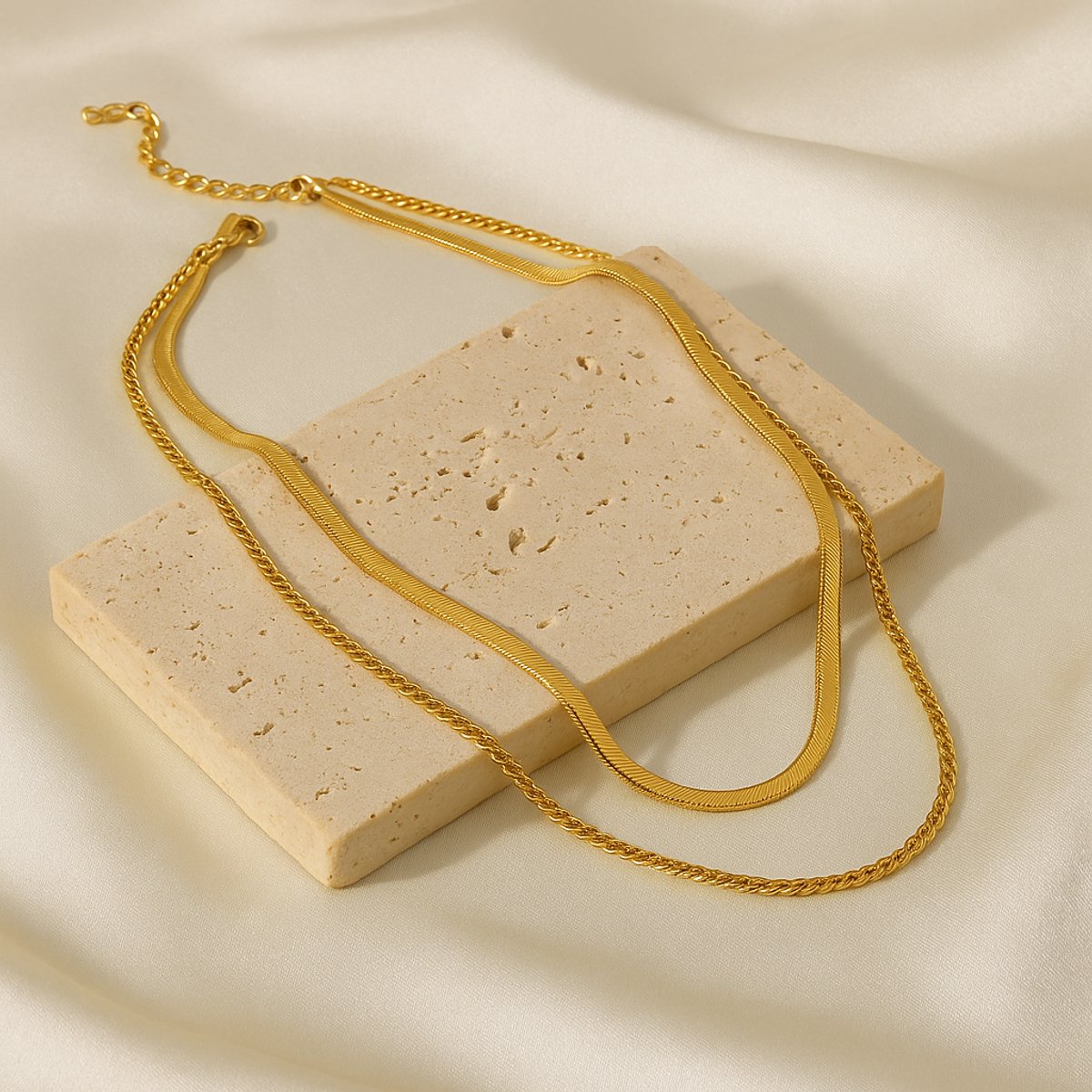

Which Jewelry Can Get Wet? Showering, Swimming and the Sea
You step into the shower, jump into the pool or walk into the sea — and every time the same doubt: should I take off my ring, necklace and earrings first, or not? The short truth is that it depends entirely on what your piece is made of. Some materials can go into the water every day for years without changing color; others turn dull, stiff or brown. In this guide you will read exactly which jewelry can get wet, which pieces you are better off taking off, and what chlorine and salty seawater really do to your jewelry.
Jewelry you can simply keep on
Made of solid stainless steel with a sturdy PVD layer — showering, washing your hands and swimming are all allowed. A selection from the Lundholm collection, one for every spot.


What does ‘waterproof’ actually mean for jewelry?
For jewelry, waterproof does not necessarily mean there is a special coating over it, but that the material itself does not react to water. A genuinely water-resistant piece does not rust, does not tarnish and does not release any color when it gets wet. So the difference lies in the raw material: a necklace of solid stainless steel stays the same for years, while a thin layer of gold plating over cheap base metal slowly comes away once water and soap pass over it again and again.
Worth knowing: even with waterproof jewelry, not all ‘water’ is the same. Clean tap water and a warm shower are harmless. Chlorinated pool water and salty seawater are more aggressive — not so much for the metal itself, but for any stones, beads and for the shine in the long run. Further down you will read what to do in each situation.
Which jewelry can get wet?
A few materials are water-resistant by nature and therefore perfectly suited to daily wear — including in the shower or the pool. These are the winners:
- Stainless steel (also called surgical steel). The most low-maintenance material there is. It does not rust, does not tarnish and is waterproof in itself. Ideal for jewelry you never want to take off again.
- PVD gold-plated (Physical Vapour Deposition). A gold-tone or silver-tone layer that is ‘burned into’ the steel through a high-tech process. This is something completely different from thin gold plating: a good PVD layer is hard, scratch-resistant and does not come away in water.
- Cubic zirconia (set). Set cubic zirconia stones handle water without any trouble and keep on sparkling. Just watch out for glued-in stones — those belong in the list below.
Want to go deeper into color-fastness? Then read our guide on which jewelry material does not change color — it explains per material how well it holds its color.
Which jewelry cannot get wet (or only carefully)?
These materials do not like prolonged or repeated contact with water. They will not fall apart straight away, but they do lose their shine, color or shape faster. So take them off before showering, swimming and doing the dishes:
- Thin gold-plated / gold plated. A wafer-thin layer of gold over base metal wears away through water, soap and friction. Over time it turns brown or greenish. Want to know why? You can read that in why is my necklace changing color.
- Real silver (925 sterling). Silver does not rust, but it does tarnish dark through a reaction with the air and perspiration. Water speeds that process up, chlorine especially. It can be polished, but maintenance-free it is not.
- Natural stone (rose quartz, amethyst, tiger's eye, lava stone). Natural stone is porous and absorbs water, which can make it turn dull or change color. Lava stone is extra porous. Preferably keep these out of the water altogether.
- Pearls (real and imitation pearl). The most delicate of them all. Pearls do not tolerate soap, chlorine or prolonged moisture — they turn dull and the stringing thread can stretch.
- Real leather. A leather bracelet becomes stiff and dry and can get water marks. So take our men's leather bracelets off before swimming.
- Glued-in stones. With stones that are fixed in place with glue, water and chlorine can affect the glue over time, which can leave a stone loose.
Shower, pool or sea — does it make a difference?
Yes, there is a difference between the kinds of water your jewelry comes into contact with. For sturdy stainless steel it matters little, but for most other materials it certainly does. Here is the overview:
| Situation | Stainless steel & PVD | Gold-plated, silver, stone, pearl, leather |
|---|---|---|
| Washing your hands | Just keep it on | Fine, pat dry briefly |
| Showering | No problem | Better to take off |
| Pool (chlorine) | Fine, rinse afterwards | Take off |
| Sea (salt water) | Fine, rinse afterwards | Take off |
| Sauna / heat | No problem | Take off (heat + sweat) |
Chlorine is the most aggressive. Stainless steel can handle it, but over time chlorine can affect the shine of stones and the suppleness of beads — so rinse your jewelry under the tap after the pool. Salty seawater is a little milder, but salt that dries on leaves a white haze behind; rinsing helps here too. Want the full story on swimming with jewelry? Then read our separate guide on whether you can swim with your jewelry.
Jewelry that never has to come off
Our entire collection is made of premium stainless steel with PVD — waterproof, hypoallergenic and color-fast. Showering, swimming, wearing it daily: it is all allowed.
View all jewelry →Beautiful and water-resistant
Another selection from the collection that can go into the water without a worry.


How to keep waterproof jewelry looking its best
Even though a piece can handle water perfectly well, a few simple habits keep it beautiful for even longer. The most important one: rinse your jewelry with clean water after chlorine or salt water and pat it dry. That way you prevent a white salt haze and keep stones clear.
Beyond that, the golden rule applies: jewelry goes on last and comes off first. Put it on after your perfume, cream and hairspray, because it is precisely those products that combine with skin oils to form a film that makes your jewelry dull — not the water itself. A piece that has gone dull perks up enormously after a quick clean. How to do that safely for each material is explained in cleaning jewelry by material.
Why Lundholm jewelry can get wet
We deliberately make our jewelry from premium stainless steel with a 2.5 micron PVD gold or silver plating. That is a considered choice: stainless steel does not rust and does not tarnish, and the PVD layer is burned in hard rather than laid thinly over the top. The result is a piece that is waterproof and hypoallergenic, holds its color and is made to be worn every day — in the shower and in the pool included.
For anyone who has no appetite for taking jewelry off, polishing it and putting it away, that is exactly the idea: jewelry that simply comes along with your day. Do you have sensitive skin? Then also read our guide on hypoallergenic jewelry. Or see right away which styles there are in our complete guide to all types of women's jewelry.
Frequently asked questions about jewelry and water
Which jewelry can get wet?
Jewelry made of solid stainless steel (also called surgical steel) and well-made PVD gold-plating handles water without any trouble. It does not rust, does not tarnish and does not release any color. Set cubic zirconia can take it too. Thin gold-plated pieces, real silver, natural stone, pearls and real leather are better taken off before showering and swimming.
Can you shower with your jewelry on?
With jewelry made of stainless steel or PVD gold-plating you can simply shower — that is no problem. Thin gold-plated pieces, silver, natural stone, pearls and leather are better taken off, because soap and warm water affect the shine, color or shape over time. If you are unsure about the material, taking it off is always the safe choice.
Can you swim with stainless steel jewelry?
Yes, stainless steel jewelry can handle both chlorinated water and salty seawater. Do rinse it with clean water after swimming and pat it dry, so that no chlorine or salt residue is left behind that could affect the shine of stones in the long run.
Does gold plating change color in water?
Thin gold plating (gold plated) can change color in water over time, because the wafer-thin layer of gold wears away through water, soap and friction. PVD gold-plating is something completely different: that layer is burned hard into the steel and does stay color-fast in water. So the difference is in the technique, not in the color.
Can you swim with silver jewelry?
Preferably not. Real silver (925 sterling) does not rust, but it does tarnish dark, and chlorine speeds that process up considerably. You can polish it up again, but maintenance-free it is not. If you want the silver look without the polishing, silver-tone stainless steel is a waterproof alternative.
Can jewelry with cubic zirconia or stones get wet?
Set cubic zirconia stones handle water without any trouble and keep on sparkling. Just watch out for glued-in stones: water and chlorine can affect the glue over time, which can leave a stone loose. Rinse jewelry with stones under the tap after the pool.
Are natural stone and pearls waterproof?
No. Natural stone such as rose quartz, amethyst, tiger's eye and lava stone is porous and absorbs water, which can make it turn dull or change color. Pearls are even more delicate and do not tolerate soap, chlorine or prolonged moisture. Keep these pieces out of the water and at most wipe them with a slightly damp cloth.
Is Lundholm jewelry waterproof?
Yes. Our jewelry is made of premium stainless steel with a 2.5 micron PVD gold or silver plating: it does not rust, does not tarnish, holds its color and is hypoallergenic. Showering, washing your hands and swimming are all fine — just rinse it after chlorine or salt water and pat it dry.
Love, the Lundholm team
