Between 10 and 20 percent of the population has a nickel allergy — and most of them are women. Finding beautiful jewelry you can actually wear is harder than it sounds. This is how Lundholm solves it — and what you can look out for yourself.
Beautiful and kind to your skin
Anyone with a nickel allergy knows how it goes: you see beautiful jewelry in a store, buy it full of excitement, and within a few hours you have itching earlobes, red wrists or irritation right where the ring had been.
You try everything. Tape around clasps. Barrier coatings from the drugstore. Expensive 18-karat pieces that do work, but also cost 800 euros and don't go with every outfit. Or “hypoallergenic” jewelry that is safe to wear but simply isn't pretty. Boring and basic.
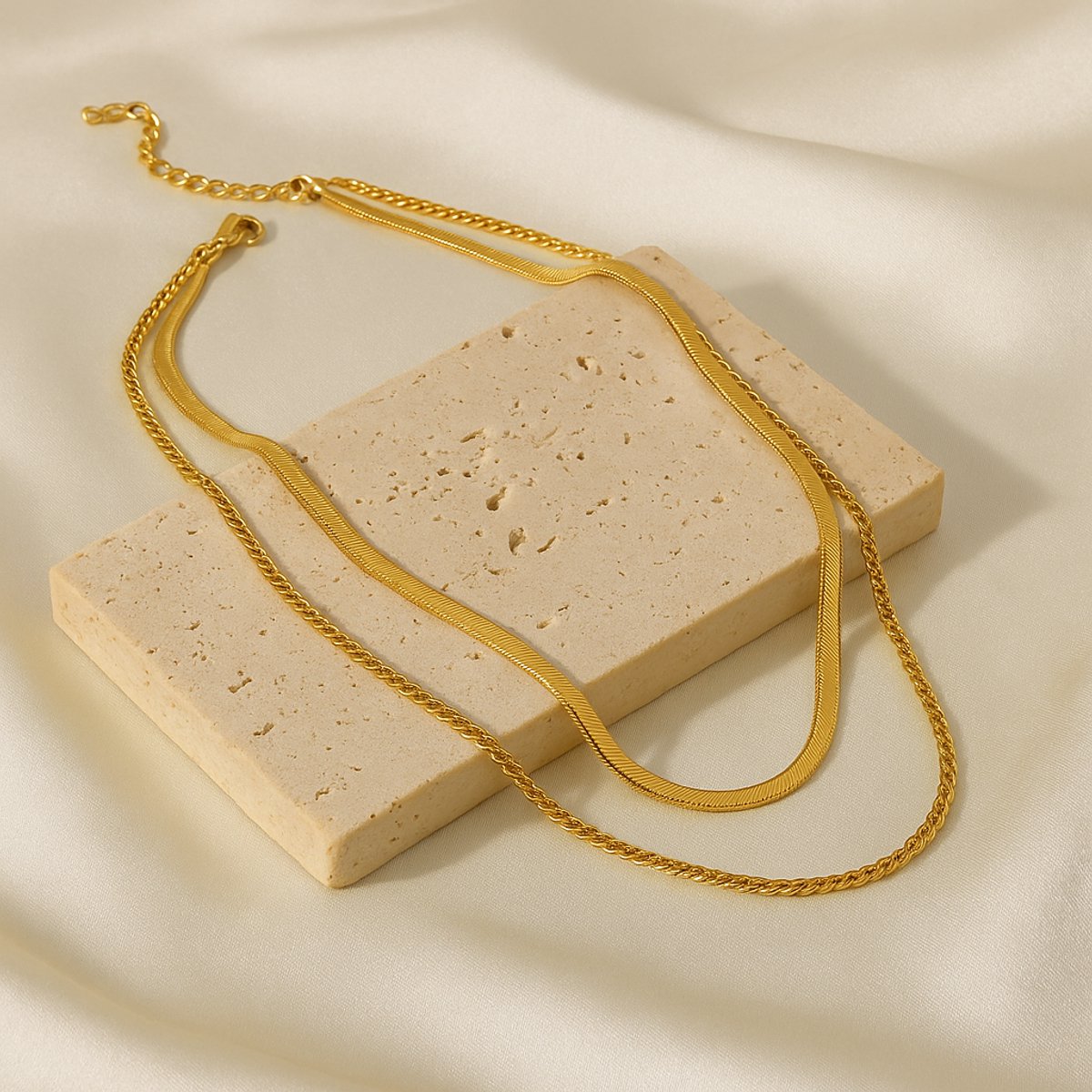
We thought: surely there has to be another way. That idea became Lundholm. A complete jewelry line made to be worn every day — Premium Stainless Steel with 2.5 micron PVD gold plating, resin bangles, statement pieces, fine chains. Feminine, Scandinavian, and simply kind to your skin.
— The Lundholm team
A nickel allergy is a contact allergy: your skin reacts to nickel ions released when a piece of jewelry touches your skin (especially with sweat or water). It is by far the most common metal allergy — 10 to 20% of the population is affected. Women 3 to 4 times more often than men, mostly because of frequent contact with jewelry.
Six Lundholm pieces loved by everyone with sensitive skin — worn by hundreds of customers with allergies. Feminine, Scandinavian, and no worrying about your ears or wrists.
Lundholm jewelry — beautiful and kind to your skin. No more choosing between the two.
We deliberately work with three material categories that we know with 100% certainty are nickel-free or nickel-safe. No grey areas, no “it usually works out fine”.
A handy overview — what should you look out for if you have a nickel allergy? Here are the most common jewelry materials, and whether they are safe or not.
Whether standard earrings make your piercings itch, you can never wear a ring for more than an hour, or you know that dark mark under your necklace all too well — there is a Lundholm solution for every category.
What is a nickel allergy?
A nickel allergy is a contact allergy in which your immune system reacts to nickel ions released when nickel-containing metal touches your skin. It is the most common metal allergy there is: 10 to 20% of the population deals with it, women 3 to 4 times more often than men. Once it develops, the allergy stays — there is no cure, only avoidance.
How do you recognize a nickel allergy from jewelry?
Symptoms usually appear within a few hours to 1-2 days after contact: itching, redness and small bumps exactly where the jewelry sits (earlobe, neck, wrist, finger). With longer contact, blisters or scabs can develop. You'll often see a clear “imprint” of your jewelry in the shape of the rash. If the reaction disappears as soon as you take the piece off, that is a strong sign of a metal allergy.
What are the symptoms of a jewelry allergy?
The most common symptoms: itching, redness, small bumps or blisters, weeping patches that form scabs, and in the longer term dry, flaky skin. With earrings: mainly on the back of the earlobe. With rings: a red band around the finger. With necklaces: a stripe of irritation where the chain rests, or at the clasp. It gets worse with sweat, water and heat.
Which jewelry is 100% hypoallergenic?
The safest options: titanium (the absolute king, contains no nickel), 18-karat gold or higher, sterling silver (S925), and high-quality Premium Stainless Steel (surgical grade) like ours. For people with extreme sensitivity, non-metal jewelry (resin, acrylic, wood) is completely safe because there is no metal contact at all.
Can you wear earrings with a nickel allergy?
Yes, as long as you choose the right materials. The post is the critical part because it stays in contact with your skin the longest. Choose posts made of Premium Stainless Steel (surgical grade), titanium or 18-karat gold — and don't rely on “hypoallergenic” labels without a specific material named. All our Lundholm earrings have Premium Stainless Steel posts, with PVD coating where needed.
What is surgical steel and is it safe with a nickel allergy?
Surgical stainless steel is the same grade of steel used in medical instruments and surgical implants. It contains traces of nickel, but bound so tightly that the ions are barely released — for 90% to 95% of people with a nickel allergy it is safe to wear. Our Premium Stainless Steel is this grade.
Is gold plated jewelry hypoallergenic?
That depends on the thickness of the coating. Cheap plating (0.5 - 1 micron) wears off quickly, exposing the metal underneath (often nickel-containing) and causing irritation. Our 2.5 micron PVD gold plating is much thicker and is physically fused on — it stays intact for years and forms a reliable barrier. Always ask about the coating thickness before you buy.
Which materials cause irritation most often?
The usual suspects: cheap fashion jewelry (often nickel alloys to keep costs down), silver or gold plated with a thin coating (wears off quickly, exposing the metal underneath), and some kinds of white gold (sometimes alloyed with nickel for hardness). Watches and belt buckles regularly contain nickel too. Always ask about the specific material — unfortunately “hypoallergenic” is not a legally protected term.
Which ring can you wear with sensitive skin?
Adjustable rings are ideal because they sit more loosely — there is less skin contact and any possible ions aren't held against the skin. Our Sophia (real natural stone, €39,95), Sienna (tiger's eye, €34,95), Amee (€27,99) and Rae (open heart, €22,95) are all adjustable and made of Premium Stainless Steel with PVD coating. For extreme sensitivity: resin bangles as an alternative to metal jewelry on the hand.
How long does the hypoallergenic PVD coating last?
With normal use, 2.5 micron PVD gold plating lasts 3 to 5 years or longer. That is far longer than cheap plating (which sometimes wears off within a few months). Our coating is physically fused on — not merely applied — so even heavy use doesn't wear through it quickly. Rinse after the sea or the pool to keep the shine going extra long.
Is all Lundholm jewelry nickel-free or hypoallergenic?
Almost all our jewelry is made from Premium Stainless Steel (surgical grade), often with 2.5 micron PVD gold plating. We also have bangles in resin or acrylic. Not sure? The material is always listed on the product page.
What do you do if you get a reaction anyway?
Take the piece off straight away. The irritation should disappear within 1-3 days. Wash the skin with a mild soap and, if needed, use a hydrocortisone cream (only after checking with your doctor). Getting a reaction despite Lundholm Premium Stainless Steel? Email us at info@lundholmstore.com — we're happy to think along with you and can offer a resin bangle or another metal-free alternative.
Can you wear hypoallergenic jewelry in the sea or the pool?
Yes, all Lundholm Premium Stainless Steel jewelry with PVD coating is waterproof and can go into the sea, the pool or the shower. Do rinse it briefly after the sea to remove salt residue — that extends the life of the coating. Resin and acrylic bangles can go anywhere with you, completely worry-free.
What is the difference between nickel-free and hypoallergenic?
Nickel-free literally means: no nickel in the material. Hypoallergenic is broader — it means “less likely to cause an allergic reaction” and can also include materials with a minimal, tightly bound amount of nickel that in practice causes no reaction. For 90-95% of people with a nickel allergy, both categories are safe. For extreme sensitivity: ask specifically for nickel-free, or choose resin, acrylic or titanium.
Even more Lundholm jewelry for sensitive skin — from fine chains to statement rings and beaded bracelets. All made from materials we wear ourselves every single day.