



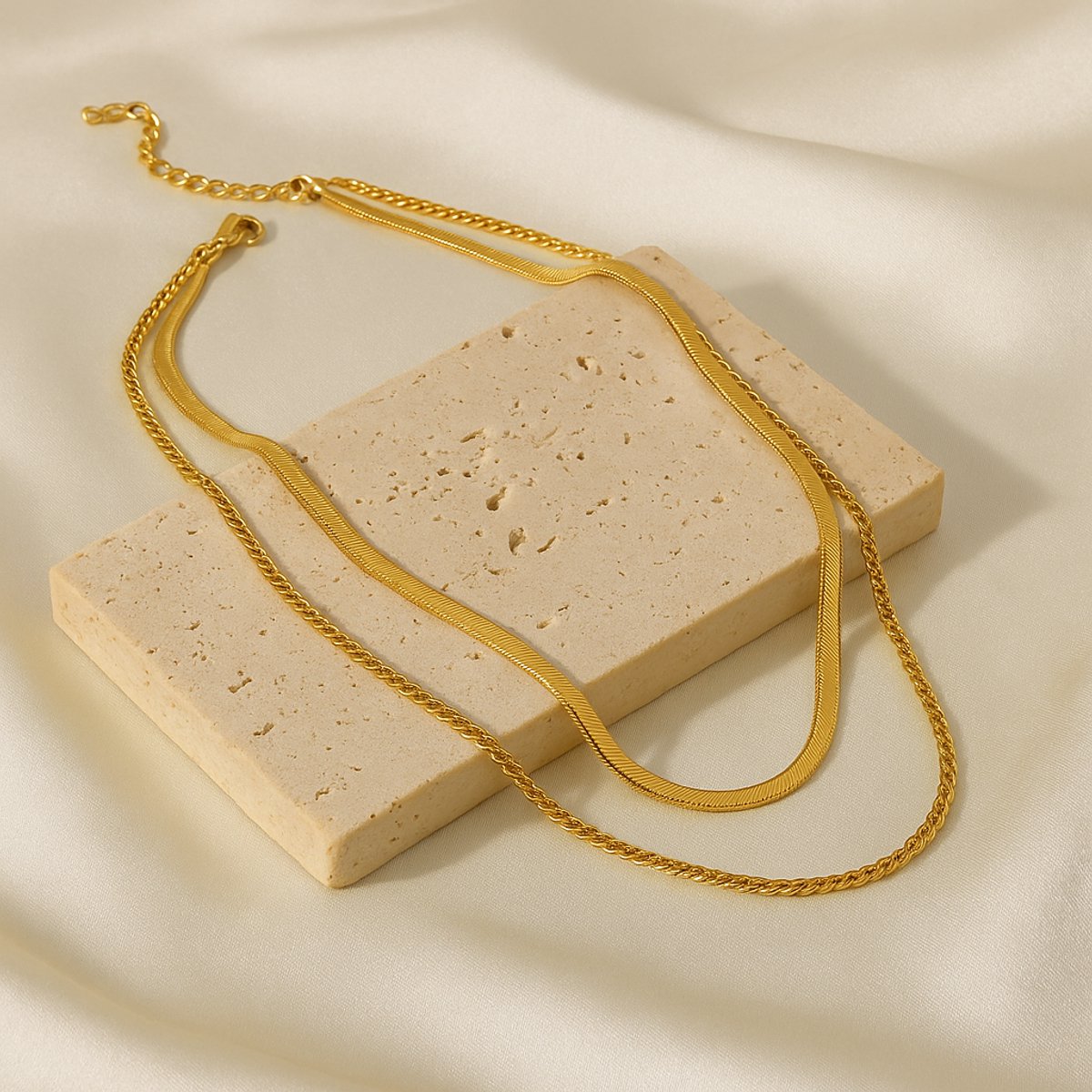

What Is Hypoallergenic Jewelry? Everything You Need to Know
Hypoallergenic jewelry is made from materials that rarely cause allergic reactions, such as titanium, stainless steel, platinum and high-karat gold. ‘Hypoallergenic’ means a lower chance of a reaction, not allergy-free. With jewelry it almost always comes down to nickel. Below you'll find what the word does and doesn't promise, which materials suit sensitive skin, and what to look for in each type of jewelry.


The short answer
Hypoallergenic jewelry carries a lower risk of an allergic reaction. It isn't a protected term and it isn't a promise, so always look at the material:
- Very suitable: titanium, niobium and platinum. They contain little or no nickel.
- Suitable for most people with sensitive skin: stainless steel (surgical steel) and yellow gold from 14 karat.
- Watch out: white gold can contain nickel, and cheap fashion jewelry made of brass or zinc alloy often has a nickel layer under the plating.
- Is stainless steel nickel-free? No. The alloy contains nickel, but it's tightly bound: very little is released during normal wear.
If you have a diagnosed nickel allergy with strong reactions, choose titanium or metal-free jewelry, and talk to your doctor if in doubt.
What does hypoallergenic actually mean?
Hypoallergenic literally means ‘less allergenic’: jewelry made from a material few people react to. There's no legal definition and no official label. Any brand may use the word, even for a piece with a thin coating over a metal that does release nickel. So the material tells you more than the label.
What is regulated by law is how much nickel jewelry may release. In the EU, jewelry that stays in prolonged contact with your skin may not release more than 0.5 micrograms of nickel per square centimetre per week. For earring posts and piercings that go through the skin, the limit is stricter: 0.2 micrograms. That rule (part of the EU's REACH regulation) protects most people, but if you're very sensitive you can still react below that limit.
Nickel allergy: how do you recognize it?
Nickel allergy is the most common contact allergy. Women are affected more often than men, partly because they wear earrings and other jewelry more often. Your skin reacts to nickel that is released from the metal by sweat and moisture. Nickel isn't only found in jewelry, by the way, but also in the button of your jeans, belt buckles and watch straps. Once you're allergic, you usually stay allergic.
- Itching and redness exactly where the jewelry sits: your earlobe, your neck near the clasp, your wrist or under your ring.
- Small bumps or blisters, sometimes weeping or crusting.
- A dry, flaky patch if you wear the piece for a long time.
- Often only after one or two days, and worse with sweat, heat and moisture.
Not every red patch is an allergy. Soap or hand cream can get trapped under a tight ring, and that irritates the skin too. If you're unsure, or it doesn't clear up once you take the jewelry off, see your doctor. A patch test at a dermatologist can show exactly what you react to.
Which materials suit sensitive skin?
Material by material: does it contain nickel, and how suitable is it for sensitive skin? It concerns all the metal that touches your skin, so the post, the clasp and the back too.
| Material | Contains nickel? | For sensitive skin |
|---|---|---|
| Titanium (implant grade) | No | One of the safest choices, even for a fresh piercing |
| Niobium | No | Very suitable; mainly used for piercings |
| Platinum | Hardly any | Very suitable, but expensive |
| Yellow gold, 14 or 18 karat | Usually not | Suitable for most people |
| White gold | Sometimes | Ask whether it is made with nickel or palladium |
| Sterling silver (925) | Usually not (silver with copper) | Fine for most people, but it tarnishes black |
| Stainless steel (304, 316L, surgical steel) | Yes, but tightly bound | Suitable for most people with sensitive skin |
| Plated brass or zinc alloy (fashion jewelry) | Often, as a layer under the plating | Often the culprit once the plating wears off |
| Resin, acrylic, wood, textile | No | No metal on your skin; do check for metal clasps |
Titanium and niobium
Titanium is light, strong and contains no nickel. That's why it's used for medical implants and for piercings in a fresh hole. Niobium is less well known but just as kind to the skin. If you see ‘titanium steel’, it usually refers to a type of stainless steel, not pure titanium.
Stainless steel and surgical steel
Stainless steel is iron with chromium and, in the common grades 304 and 316L, nickel as well. ‘Surgical steel’ is an umbrella term for skin-friendly grades, usually 316L. The nickel is locked tightly into the alloy, and a thin layer of chromium oxide on the surface slows its release. That's why good stainless steel releases very little nickel during normal wear and suits most people with sensitive skin. If you're extremely sensitive, titanium is the safer choice.
Gold and silver
Yellow gold of 14 or 18 karat consists mainly of gold, silver and copper and rarely causes problems. The lower the karat, the more other metals it contains. White gold is a different story: it's sometimes made with nickel to get the white colour. Sterling silver is silver with copper and rarely causes an allergic reaction, but it does tarnish black. Which materials tarnish least is covered in which jewelry material doesn’t tarnish?
Fashion jewelry and plating
Cheap jewelry is often made of brass or zinc alloy with a thin gold- or silver-coloured coating. Underneath that coating there's often a layer of nickel, because the plating adheres to it better. As long as the coating is intact, you won't notice anything. Once it wears through, your skin touches the nickel. That's why a new piece sometimes only starts to itch after a few weeks.
Is stainless steel nickel-free?
No, not entirely, and it's worth being honest about that. The usual jewelry grades, 304 and 316L, contain roughly 8 to 14 percent nickel. That sounds like a lot, but what matters is how much nickel is released, and with good stainless steel that's very little. Truly nickel-free are titanium, niobium, most types of yellow gold and metal-free jewelry.
If stainless steel jewelry is still labelled ‘nickel-free’, it usually means the piece releases very little nickel and stays within the European limit. For most people, that's exactly what counts. If you have a strong nickel allergy, choose titanium or metal-free jewelry.
What is Lundholm jewelry made of?
Lundholm jewelry is made of premium stainless steel. The gold-tone pieces have a PVD layer: a hard colour layer applied to the steel in a vacuum chamber. The silver-tone pieces are mostly polished steel without an extra coating. They are waterproof and hypoallergenic, and suitable for most people with sensitive skin. The material is always listed on the product page.
We also have resin bangles, such as the Nienke. They contain no metal, so they are a good choice if your wrist reacts to any metal.
Earrings for sensitive ears: watch the post
Earrings cause the most trouble, because the post sits in the piercing, inside the skin itself. So choose posts and backs made of stainless steel, titanium or gold from 14 karat. Small studs and huggies are the easiest: little weight and little friction.
Got a fresh piercing? Have it done with titanium or surgical steel and only switch once it has fully healed. Don't push the butterfly back on too tightly, so air can reach your earlobe, and clean the posts now and then with lukewarm water and a drop of mild soap. An ear cuff goes around your ear instead of through it: handy if you don't want an extra piercing.

Pictured
An ear stack for sensitive ears
Inez hearts, Delia hoops with cubic zirconia, Nikki studs and the Liz ear cuff: all stainless steel with a gold-tone PVD layer. The ear cuff simply clips around your ear, no piercing needed.
View the Liz ear cuff →


You'll find more small studs and huggies among our earrings. The different types are explained in our guide to earring types, and for multiple piercings have a look at the ear party.
Necklaces: mind the clasp at the back of your neck
With a necklace, the skin often reacts at the back of your neck, where the clasp sits and where sweat and perfume meet. Spray perfume on your wrist rather than your neck, and put your necklace on when your skin is dry. If you wear it all day, choose a fine necklace that doesn't sit tight, so the clasp doesn't keep rubbing the same spot.


All styles are in our necklaces collection. Which length suits you is explained in necklace types and lengths.
Bracelets: sweat, friction and your watch
Your wrist sweats more than you think, especially under a watch strap or a tight bracelet. Leave a finger's width of room so your skin can breathe, and avoid wearing your watch and bracelets right on top of each other. If your wrist reacts to anything metal, try a metal-free bangle.


Find more among our bracelets. How to combine them is explained in stacking bracelets.
Rings: the skin under your ring
Red, dry skin under a ring is far from always an allergy. Soap, water and hand cream often get trapped under a tight ring, and that's irritating. Dry your hands well, take your ring off for the dishes and cleaning, and apply hand cream before you put your ring on, not after. An open or adjustable ring sits a little looser, so less moisture stays trapped underneath.

Pictured
Phoenix – open wave ring
Three wavy bands in one adjustable stainless steel ring with a gold-tone PVD layer. Because it's open, you can adjust it so it sits comfortably and doesn't pinch.
View the Phoenix →


Not sure about your size? Read how to measure your ring size yourself or browse all rings.
How to wear jewelry with sensitive skin
A few habits give your skin the most peace:
- Choose by material, not by the word. Look for stainless steel, titanium or gold from 14 karat.
- Cream and perfume first, then your jewelry. Let everything soak in first.
- Keep your jewelry clean. Rinse it with lukewarm water and a drop of mild soap and dry it well. Step by step: how to clean jewelry by material.
- Pat it dry. After a shower or workout, moisture lingers under rings and behind earrings.
- Give your skin a break. Take your jewelry off at night if your skin reacts easily.
- Reacting anyway? Take the piece off and let your skin settle. If it doesn't clear up, see your doctor.
Waterproof stainless steel jewelry can go in the shower with you. What you can and can't do in the sea, the pool and the sauna is covered in jewelry you can wear in water.
Shipping and gift packaging
Order before 3 pm (CET) on a working day and we'll ship your jewelry the same day. The free-shipping threshold depends on your country; you'll find the details on our shipping page. Every piece arrives gift-ready, and when you order from our own webshop you always get a free gift bag. With higher order values you also get free gifts through our gift ladder (different ones every month).
Frequently asked questions about hypoallergenic jewelry
What does hypoallergenic mean for jewelry?
Hypoallergenic means a piece is made from a material that rarely causes allergic reactions, such as titanium, stainless steel or gold from 14 karat. It isn't a protected term and no promise that you'll never react. So always check the material.
Is hypoallergenic jewelry nickel-free?
Not always. Titanium, niobium, most types of yellow gold and metal-free jewelry are nickel-free. Stainless steel does contain nickel, but it's tightly bound and hardly released during normal wear. That's why it's called hypoallergenic, but not nickel-free.
Can I wear stainless steel with a nickel allergy?
Most people with a nickel allergy can wear stainless steel well, because it releases very little nickel. If you're extremely sensitive or have reacted to steel before, choose titanium or metal-free jewelry, and talk to your doctor if in doubt.
Is surgical steel hypoallergenic?
Surgical steel is a name for skin-friendly grades of stainless steel, usually 316L. It contains nickel but releases very little of it. It suits most people with sensitive skin.
Is sterling silver hypoallergenic?
Sterling silver (925) is silver usually alloyed with copper and rarely causes an allergic reaction. It does tarnish black from sulphur in the air. Silver-plated or cheap silver-tone fashion jewelry can contain nickel, though.
Is gold hypoallergenic?
Yellow gold of 14 or 18 karat rarely causes problems. The lower the karat, the more other metals it contains. White gold is sometimes made with nickel, so with white gold, ask about the alloy.
Which earrings are best for sensitive ears?
Choose small studs or huggies with a post of titanium, stainless steel or gold from 14 karat. For a fresh piercing, titanium is the safest choice. An ear cuff goes around your ear and needs no piercing.
What is the difference between nickel-free and hypoallergenic?
Nickel-free means the material contains no nickel. Hypoallergenic is broader: the material rarely causes allergic reactions, even if it contains a small, tightly bound amount of nickel, as stainless steel does.
Is Lundholm jewelry hypoallergenic?
Yes. Lundholm jewelry is made of premium stainless steel, the gold-tone pieces with a PVD layer. It is waterproof and hypoallergenic, and suitable for most people with sensitive skin. We also have metal-free resin bangles.
What should you do if you react anyway?
Take the piece off and let your skin settle. If the reaction doesn't clear up, or you're not sure what you're reacting to, see your doctor. A patch test at a dermatologist can show what you're allergic to.
Jewelry for every day
Discover Lundholm earrings, necklaces and rings: premium stainless steel, waterproof, hypoallergenic and always gift-ready.
